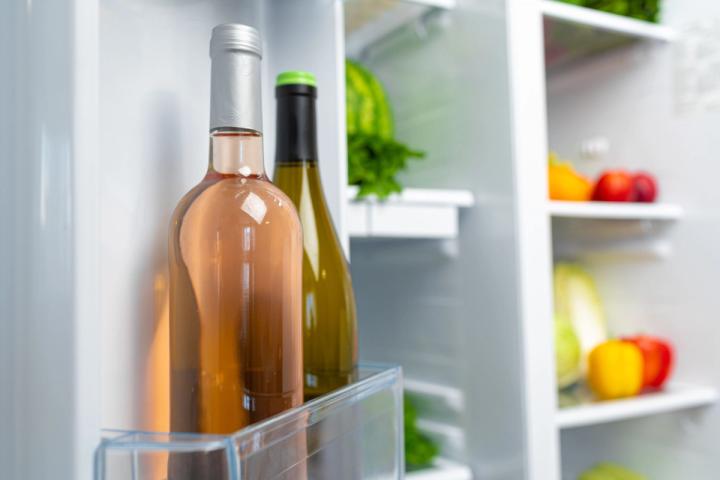
How to store non-alcoholic wine: a practical guide
NeoVina Editorial · 14 April 2026 · 6 min read
Conventional wine is forgiving because alcohol is a natural preservative—it is essentially a liquid force field. When you remove it through dealcoholisation, that shield vanishes. The result is a liquid that is significantly more sensitive to heat, light, and oxygen. Treating an alcohol-free bottle like a standard Cabernet is the quickest way to end up with a glass that tastes flat, "cooked," or fundamentally broken.
In the world of professional F&B and serious home drinking, understanding the molecular fragility of these wines is the difference between a premium experience and a drain-pour.
TL;DR: The Key Takeaways
- The Expiry Reality: Non-alcoholic wines are only stable for a limited time. Check the best before date; it is a hard deadline for molecular stability.
- The Fridge Rule: Heat is the primary catalyst for spoilage. A refrigerator is the safest place for long-term storage, especially for sulphite-free wines.
- The 3-Day Clock: Once opened, oxidation moves rapidly. Use a vacuum-seal wine stopper and finish the bottle within about three days.
- Zero Cellaring: Unlike traditional wine, NA wine does not improve with age. There are no secondary or tertiary characteristics to wait for; buy for immediate consumption.
The Science: Why Alcohol-Free is Fragile
In traditional winemaking, ethanol (alcohol) acts as a powerful antimicrobial agent and stabilizer. It inhibits the growth of bacteria and yeast that would otherwise turn the wine into vinegar. When we remove that ethanol through vacuum distillation or reverse osmosis, we create a high-nutrient, low-protection environment.
Without the "preservative cloak" of alcohol, the wine becomes a playground for microbes. This is why storage isn't just about "keeping it cool", it's about molecular defense. When you leave an NA wine in a warm environment, you aren't just warming the liquid; you are accelerating the chemical reactions that break down esters and thiols (the compounds responsible for those fruit and floral aromas).
The Best Before Date is Not Optional
In the world of 14% ABV reds, vintage years are a point of pride. In the non-alcoholic category, the best before date is the only number that matters for quality. Most NA wines taste best when young.
If a wine is sulphite-free or low in sulphur dioxide, that window shrinks even further. Why? Because sulphur dioxide is the second line of defense after alcohol. It binds with oxygen to prevent oxidation and kills off unwanted wild yeasts. If your bottle is "low-intervention" or "natural" NA wine, it is essentially defenseless against room temperature.
The Radical Truth: There is no "aging" in NA wine, only declining. If you cellar these bottles, you aren't waiting for complexity; you’re waiting for the wine to die.
The Banana Comparison: Understanding Spoilage
Think of non-alcoholic wine like a peeled banana versus an unpeeled one. Traditional wine (with alcohol) is the unpeeled banana—protected by its skin. Non-alcoholic wine is the peeled fruit. Once the protective barrier is gone, the interaction with the environment is immediate. Just as a peeled banana browns quickly due to enzymatic browning, an NA wine "browns" molecularly when exposed to warmth. The fruit profile shifts from fresh and vibrant to jammy, stewed, and eventually, metallic.
Where to Store: The Cooling Strategy
The rule is simple: if you wouldn't leave a carton of fresh juice on a sunny windowsill, don't do it to your NA wine. While a kitchen shelf looks great for the "aesthetic," it’s often a heat trap, especially near appliances.
The Refrigerator is Your Cellar
Anything you won't drink within a few days belongs in the refrigerator. This is especially important for sulphite-free wines. Cold temperatures slow down the kinetic energy of molecules, meaning oxidation happens at a fraction of the speed it would at room temperature.
Avoid storage near:
- The Oven/Stove: Even occasional heat spikes can "cook" the delicate fruit notes in an NA Riesling.
- The Dishwasher: The micro-vibrations and humidity cycles can compromise the seal over time.
- Direct Sunlight: UV rays trigger "light-strike," a chemical reaction that creates off-flavors (often smelling like wet wool or burnt rubber).
For professionals, a dedicated wine fridge is ideal, but for NA wines, colder is safer than warmer. If you have space in a standard food fridge, use it.
Post-Opening: Managing the Fade
The second air hits the wine, the aromatics start their exit. This is a process of volatile compounds escaping the liquid and oxygen molecules entering it.
The Race Against Oxygen
Without ethanol to slow the process, most non-alcoholic wines lose their structural "punch" in 2 to 3 days. Here is the NeoVina breakdown of the "Fade":
- Day 1: Peak expression. High acidity, vibrant aromatics.
- Day 2: Subtle softening. The "nose" is less intense, but the palate is usually still balanced.
- Day 3: Noticeable decline. Acidity may start to feel "sharp" rather than integrated, and the fruit notes turn "bruised."
Pro Tip: Use a high-quality, vacuum-seal wine stopper. By pumping the air out of the bottle, you reduce the surface area of oxygen in contact with the wine. If you are drinking sparkling, a pressurized Champagne stopper is non-negotiable. Note that NA sparkling carbonation dissipates significantly faster than in conventional bubbly because the liquid density is different, plan to finish the bottle the day you open it.
Professional Protocol: For Restaurants and Retail
If you are managing a beverage program, the storage of NA wine is a reputation-builder. A guest being served a flat, oxidized 0.0% Chardonnay will blame the category, not the storage.
- Inventory Rotation: Use a strict First-In, First-Out (FIFO) system. Because there is no benefit to "vintage" NA wine, the oldest stock must always move first.
- The Ambient Shelving Myth: Retailers often place NA wine on ambient shelves next to spirits. This is a mistake. NA wine should be treated like craft beer or fresh cider, stored chilled to maintain the integrity of the dealcoholisation work.
Troubleshooting: Has it Gone Bad?
Because NA wine is a relatively new category for many, it can be hard to tell if a bottle is "off" or if that is just how it tastes. Look for these red flags:
- The "Vinegar" Sting: If the wine smells like salad dressing, acetic acid bacteria have moved in.
- Cloudiness: Unless it’s an unfiltered natural wine, a hazy appearance usually indicates secondary fermentation in the bottle.
- Flatness: If a wine that usually has high acidity tastes like "thin juice," it has likely been heat-damaged or oxidized.
The Verdict
Treat your non-alcoholic wine like fresh produce, not a museum piece. Buy it fresh, keep it cold, and drink it fast. The molecular reality is that these wines are built for enjoyment in the now, not for the cellar of the future.
Cheers to staying sharp.